| “ | Art does not reproduce the visible; rather, it makes visible. | ” |
—Paul Klee. | ||
Some of the artists from this movement includes
 |
| Wassily Kandinsky |
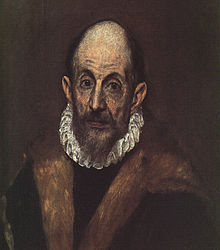 |
| El Greco |
 |
| Paul Klee |
Franz Marc

Franz Marc (1880 - 1916) was a German painter and printmaker, one of the key figures during the German Expressionist movement. He discovered a strong affinity for the work of Vincent Van Gogh, who was an Impressionist.
Marc gave an emotional meaning or purpose to the colours he used in his work:-
Blue : Masculinity and spirituality
Yellow : Feminine joy
Red : Violence
Most of his works portray animals in natural scenes.
Characterized by bright primary colours.
There are profound sense of emotion and thoughts behind his works.
Attracted notice in influential circles.
Artworks:
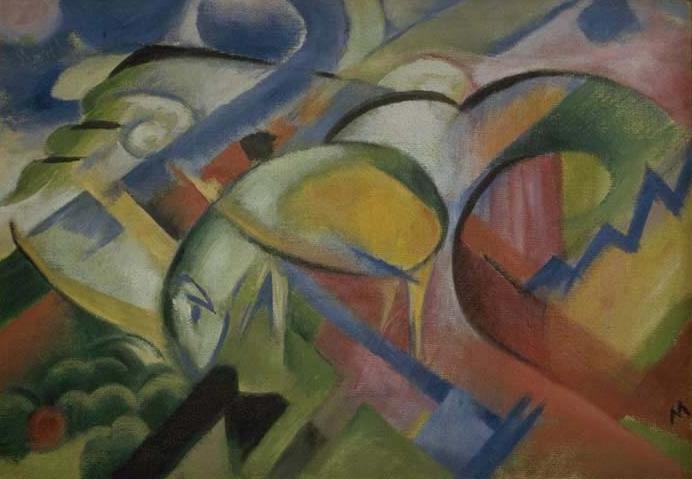 |
| The Lamb |
 |
| Fighting Forms |
 |
| Deer in The Woods II |
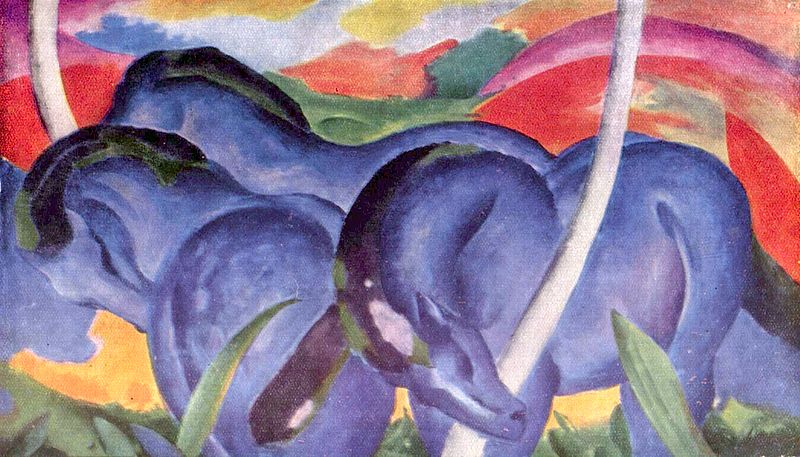 |
| The Large Blue Horses |
 |
| Haystacks in The Snow |
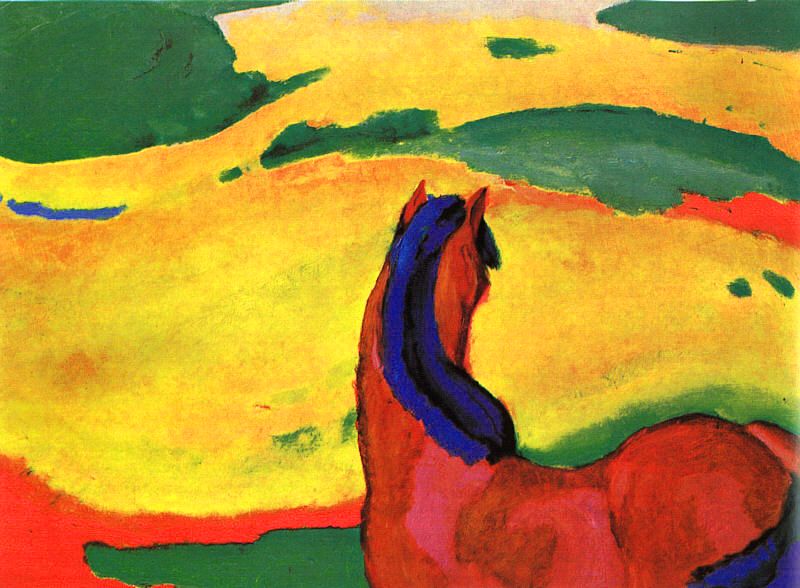 |
| Horse in A Landscape |
Fate of the Animals/Animal Destinies :
 |
| Fate of The Animals |
Marc completed the work in 1913, when "the tension of impending cataclysm had pervaded society", as one art historian noted.
On the rear of the canvas, Marc wrote, "Und Alles Sein ist flammend Leid", meaning "And all being is flaming agony".
Conscripted during World War I, Marc wrote to his wife of the painting, it "is like a premonition of this war - horrible and shattering. I can hardly conceive that I painted it."
Elements of Design
Lines - the path of a point
Diagonal lines are used to create divisions and represent emotional charges of the animals. Lines pointing at different directions create a sense of conflict.
Shapes - perceivable areas.
Not much clarity in shapes. Used to portray a sense of uncertainty and inner conflict.
Value - relative light and darkness
Relatively high contrast of light and dark to convey the dramatic mood.
Colours - basic colour theory
Wide range of colours. Used to represent the many emotions in chaos.
Texture - surface quality
Smooth texture.
Alignment - lining of elements
The artist has used the oblique arrangement for the alignment of the work to suggest movement and action.
Proportion - relative size of the object
The visual elements in the work has almost the same proportion as each other. However, a little more emphasis is placed on the blue deer in the middle because the size is larger as compared to others.
Eye movement - the visual path our eye will follow
Basically, the work directs us to see it in a circular movement, be it in a clockwise direction or anti-clockwise.
Principles of Design
Hierarchy
There is not much hierarchy, but the focus is slightly more on the blue deer.
Balance - equalizing the visual weight of elements
There is not much symmetric balance in this work. However, the balance between each portion is quite well spread.
Proximity
Rhythm/repetition
There are a few repetition of jagged edges, creating a sense of torn emotions.
Scale - overall size
Unity/variety
There are much usage of variation in this work, especially in the use of colours, shapes, and lines. However, there is also a sense of unity as all parts of the work work together to provide a sense of togetherness.
Other Expressionism Artworks
Conscripted during World War I, Marc wrote to his wife of the painting, it "is like a premonition of this war - horrible and shattering. I can hardly conceive that I painted it."
Elements of Design
Lines - the path of a point
Diagonal lines are used to create divisions and represent emotional charges of the animals. Lines pointing at different directions create a sense of conflict.
Shapes - perceivable areas.
Not much clarity in shapes. Used to portray a sense of uncertainty and inner conflict.
Value - relative light and darkness
Relatively high contrast of light and dark to convey the dramatic mood.
Colours - basic colour theory
Wide range of colours. Used to represent the many emotions in chaos.
Texture - surface quality
Smooth texture.
Alignment - lining of elements
The artist has used the oblique arrangement for the alignment of the work to suggest movement and action.
Proportion - relative size of the object
The visual elements in the work has almost the same proportion as each other. However, a little more emphasis is placed on the blue deer in the middle because the size is larger as compared to others.
Eye movement - the visual path our eye will follow
Basically, the work directs us to see it in a circular movement, be it in a clockwise direction or anti-clockwise.
Principles of Design
Hierarchy
There is not much hierarchy, but the focus is slightly more on the blue deer.
Balance - equalizing the visual weight of elements
There is not much symmetric balance in this work. However, the balance between each portion is quite well spread.
Proximity
Rhythm/repetition
There are a few repetition of jagged edges, creating a sense of torn emotions.
Scale - overall size
Unity/variety
There are much usage of variation in this work, especially in the use of colours, shapes, and lines. However, there is also a sense of unity as all parts of the work work together to provide a sense of togetherness.
Other Expressionism Artworks
 |
| The Scream by Edvard Munch |
 |
| Nollendorfplatz by Ernst Ludwig Kirchner |
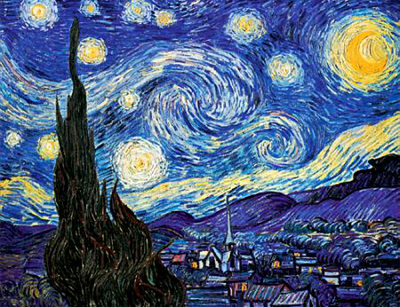 |
| The Starry Night by Vincent Van Gogh |

No comments:
Post a Comment